
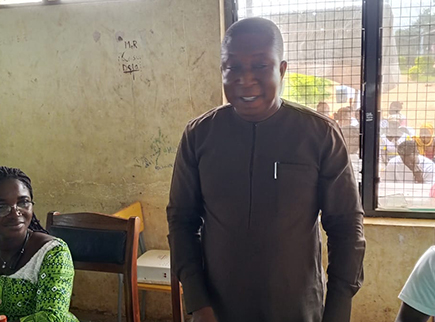
Mr Franklin Amesimeku, the Headmaster of Hohoe E.P. Senior High School (HEPSS), says the school has put in place special intervention programmes in English Language and Mathematics for students admitted with weak Basic Education Certificate Examination (BECE) results.
He said the initiative was aimed at strengthening the academic foundation of such learners to enable them to perform well in the West African Senior School Certificate Examination (WASSCE).
Mr Amesimeku made the disclosure at a Parents-Teacher Association (PTA) meeting held at Hohoe in the Volta Region.
He disagreed with the perception held by some members of the public that students who gain admission to senior high school with poor BECE grades were incapable of excelling academically.
According to him, experience at HEPSS had shown that with the right academic support and commitment from students, many of them improved significantly and passed their WASSCE, though he admitted that a few still failed to amend their attitudes towards learning and performed poorly.
The headmaster also expressed concern about cases of petty stealing in the school dormitories and appealed to parents to advise their wards to desist from such acts.
He cautioned that school authorities would deal decisively with any student caught engaging in theft.
On character formation, Mr Amesimeku said the Guidance and Counselling Unit was undertaking extensive programmes in moulding and grooming students, and assured parents that they would observe positive changes in their children’s character when they returned home.
He announced that first-year students would break on Thursday, December 18, 2025, and resume academic work on March 16, 2025, while second-year students would report on January 5, 2025, for academic work.
Rev. Andrews Tsahey, the PTA Chairman, urged parents to honour the payment of their dues and levies to enable the association to implement its planned development projects.
He said government support alone was inadequate to address all the needs of the school, stressing the importance of parental support in improving infrastructure and academic outcomes.