
Mr Eric Opoku, Minister of Food and Agriculture, has called for stronger collaboration and practical solutions to accelerate Ghana’s agricultural transformation.
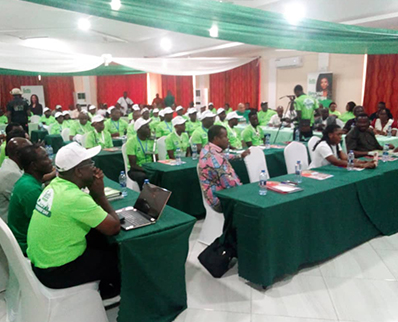
Speaking at the Agricultural Development Bank (ADB) National Farmers’ Forum in Ho ahead of the 2024 National Farmers’ Day celebration, he said the forum was not merely a moment of festivity, but a platform to address challenges and design workable interventions.
He said the Ministry’s vision was to elevate agriculture to ensure Ghanaian farmers lead the transformation of the national food system.

“We chose the theme ‘Feed Ghana, Eat Ghana, Secure the Future’ because food security is a shared responsibility,” he noted, urging citizens to support farmers by purchasing locally produced foods to stimulate market demand.
Mr Opoku said food inflation had reduced to 28.3 per cent in January 2025 from 61 per cent in January 2023. Despite progress, Ghana remains among the top 10 countries globally with the highest food inflation.
“As food inflation rises, more people fall into poverty. Reducing food inflation is therefore the same as reducing poverty,” he stated.
He said Ghana had over seven million hectares of arable land, abundant water bodies and access to a 1.6-billion-consumer continental market, yet continued to import basic vegetables including onions and pepper. This, he said, must be reversed through targeted investment, farmer mobilisation and the right strategies.
The Minister outlined policy priorities including sustainability, full utilisation of produce and addressing the estimated 30 per cent post-harvest losses. Transitioning from rain-fed to irrigation-led agriculture remained key, with increased investment in irrigation infrastructure.
He said value addition was central to government’s agenda, announcing meat and poultry processing factories and a nationwide poultry expansion programme that will introduce about 10 million birds into the system overall. Three million birds were being distributed for backyard poultry with about 2.6 million expected to survive, while 50 commercial farmers would each receive 80,000 birds and medium-scale farmers between 1,000 and 3,000 birds.
He stressed that agriculture must not be politicised as food crises affected all citizens and said a committee of university professors had been set up to select awardees for Farmers’ Day based on verifiable evidence.
The forum also witnessed the launch of the FEED GHANA Policy Document, which sets targets in rice, maize, poultry and other commodities and will serve as the sector’s guiding framework.
Madam Emelia Arthur, Minister of Fisheries and Aquaculture Development, in a speech read on her behalf by Madam Rosemary Abbey, commended ADB for convening a platform that unites farmers, fishers, financiers and policymakers.

She said fish contributed over 60 per cent of Ghana’s animal protein intake and supported more than three million livelihoods, stressing sustainability as a national priority. She outlined reforms including implementation of the Fisheries and Aquaculture Act, 2025 (Act 1146), strengthening co-management, tackling illegal fishing, upgrading landing sites, expanding hatchery capacity, reforming the premix fuel system and promoting PPPs.
Mr James Gunu, Volta Regional Minister, said the engagement demonstrated the region’s commitment to strengthening the sector through dialogue and innovation, describing the FEED GHANA Policy launch as a major milestone for food security, job creation and agribusiness development.
He reaffirmed the Region’s support for producers in rice, vegetables, aquaculture, cassava, maize and livestock.
Mr Kwame Asiedu Attrams, General Manager of Agribusiness at ADB, reaffirmed the Bank’s mandate to support modern agriculture and sector growth. He said ADB continues partnering farmer cooperatives nationwide to improve credit access and strengthen food supply chains.
“Sustainability remains central to our financing decisions. Projects must be environmentally friendly, socially responsible and economically viable,” he said, adding that ADB’s value chain investments were creating jobs and improving livelihoods.