

The Ghana Anti-Corruption Coalition (GACC) has held a stakeholder forum in Tema to deepen public understanding of the Office of the Special Prosecutor (OSP) law and related anti-corruption frameworks.
The forum forms part of efforts to strengthen national dialogue and citizen engagement in the fight against corruption.
The event, organised with funding support from the Deutsche Gesellschaft für Internationale Zusammenarbeit (GIZ), formed part of GACC’s public education campaign under the project “Strengthening the Rule of Law and the Fight Against Corruption.”
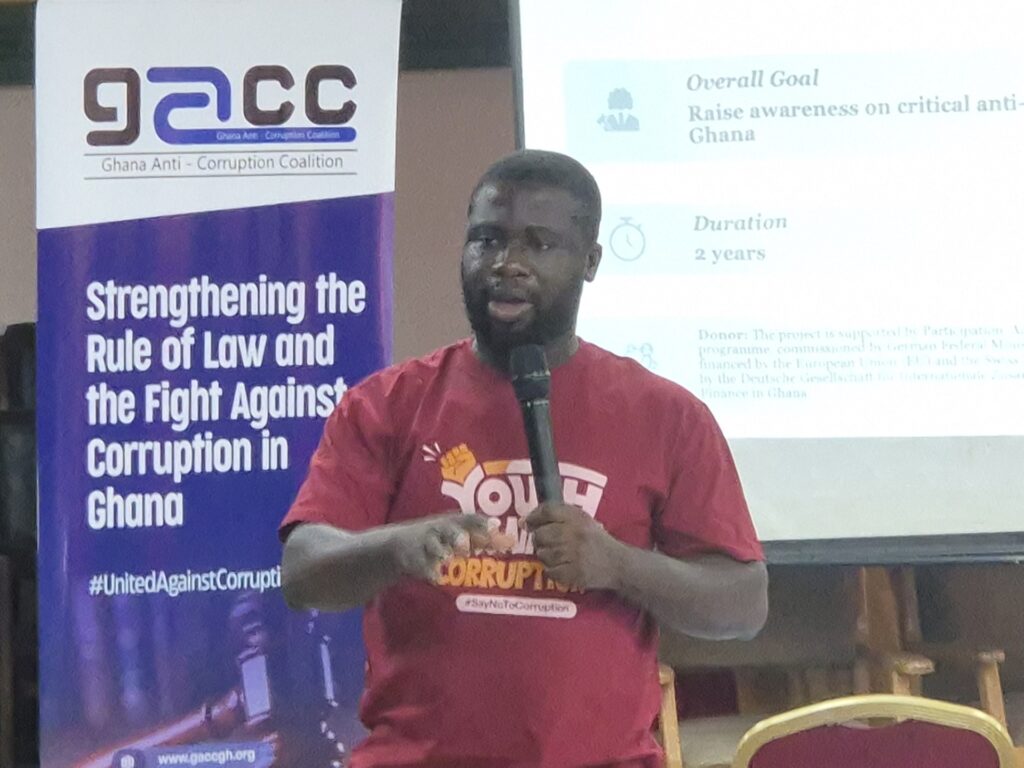
It was aimed at promoting dialogue among key actors, raising awareness of the OSP’s mandate, and encouraging ethical conduct and citizen action against corruption.
Mr Solomon Yankah, Monitoring and Evaluation Officer at GACC, said the overall goal of the forum was to raise awareness of critical anti-corruption issues, noting that corruption could not be fought by a single institution.
Mr Yankah said GACC was made up of 13 organisations, including the Commission on Human Rights and Administrative Justice (CHRAJ), the Economic and Organised Crime Office (EOCO), the National Commission on Civic Education (NCCE), the Public Procurement Authority, the Ghana Audit Service and seven civil society organisations, including the Ghana Journalists Association, which help amplify anti-corruption messaging.
He explained that the Local Accountability Networks (LANets), which operate at the district level and include representatives from various community groupings, serve as liaison structures between citizens and the assemblies, strengthening engagement on governance and accountability.
He expressed concern that Ghana continued to lose substantial resources to corruption, estimating annual losses at about three billion dollars.
He added that recent national challenges, including security issues, demonstrated that the country’s developmental needs had not yet been resolved, making corruption an even greater setback.
Ms Dorcas Affum Tenkorang, Programmes Assistant at GACC, said corruption was increasingly becoming normalised among Ghanaians.
Ms Tenkorang stressed that corruption “steals from citizens”, noting that unemployment remained high, with many young people finishing school and staying jobless while others paid their way into opportunities.
She said this reality informed GACC’s bottom-up approach, which sought to ensure that the fight against corruption involved citizens at all levels.
She emphasised that the establishment of the OSP was neither a political campaign creation nor a job for favoured individuals; rather, Ghana had signed international treaties, including the United Nations Convention Against Corruption (UNCAC), which required state parties to establish specialised institutions to combat corruption; therefore, the public should view the OSP as a national institution rather than a political one.
She defined corruption as “the abuse of entrusted power for private gain”, adding that manifestations included bribery, fraud, embezzlement, extortion, conflict of interest, favouritism, nepotism, facilitation payments and illegal contributions.
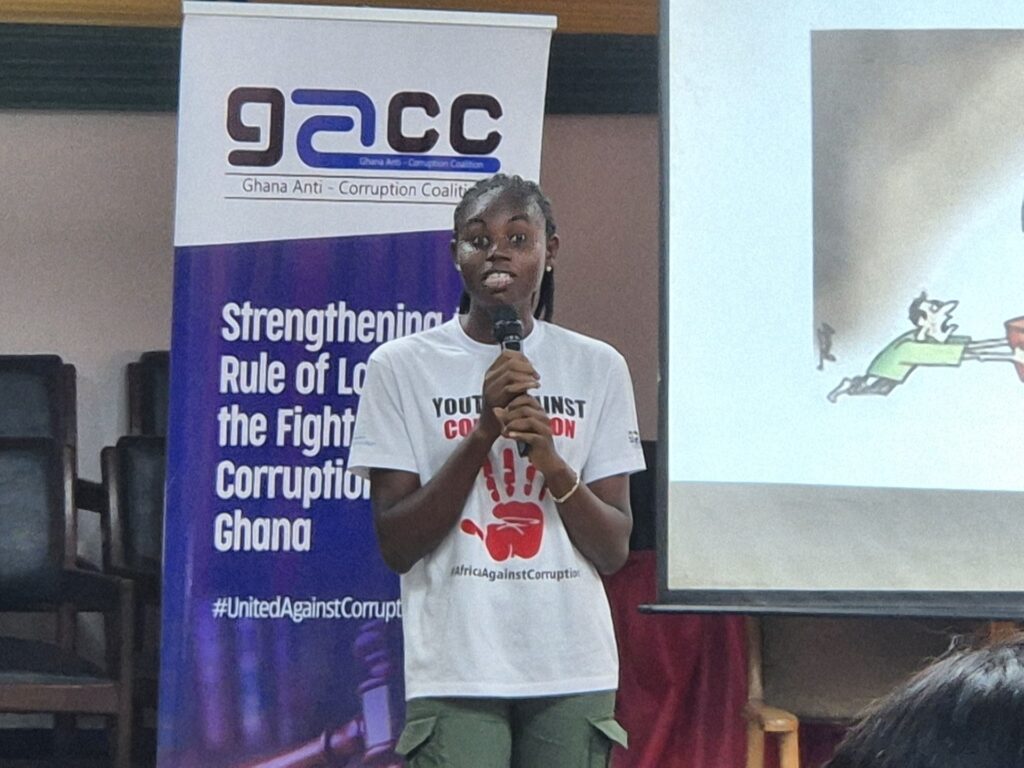
She noted that successive governments had introduced several legal and institutional reforms, such as the Office of the Attorney-General, CHRAJ, EOCO, the Whistleblowers Act, 2006 (Act 720), and the National Anti-Corruption Plan (2015–2024), yet effectiveness remained constrained by low public awareness, mistrust of institutions and weak engagement at the district level.
Highlighting Ghana’s obligations under UNCAC, she said Article 36 required state parties to ensure the existence of specialised bodies for combating corruption through law enforcement, indicating that this formed the basis for establishing the OSP in Ghana.
She explained that the OSP, operational since 2018, had a mandate to investigate and prosecute suspected corruption and corruption-related offences under the Criminal Offences Act, Public Procurement Act and other relevant laws.
She added that the Office was also empowered to recover proceeds of corruption, with its jurisdiction covering citizens, public officials, politically exposed persons, private individuals and legal entities, including companies, organisations, associations and clubs.