
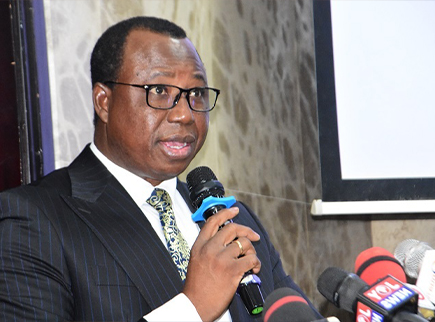
Dr Joseph Whittal, the CHRAJ Commissioner, has called for renewed national commitment to safeguarding the rights and wellbeing of children in Ghana’s rapidly expanding digital environment.
He said while the digital age offered immense opportunities for learning, creativity and global connectivity, it also exposed children to increasing risks.
These include cyberbullying, sexual exploitation, trafficking, harmful content, radicalisation, identity theft and digital addiction.
Dr Whittal made the call when delivering the keynote address at the Commission on Human Rights and Administrative Justice (CHRAJ) training for students on digital advocacy to mark the 2025 International Human Rights Day.
The event was on the theme: “Human Rights Are Everyday Essentials: Child Rights in the Digital and Cyberspace in Ghana.”
He said the theme underscored the urgent need to prioritise the safety of children who increasingly lived, learned and interacted online.
“Cyberbullying, online grooming, exposure to violent and pornographic material and digital fraud are no longer remote dangers; they are present and growing threats to the Ghanaian child,” he said.
The Commissioner stressed that child rights were “everyday essentials” that must be protected both offline and online, in line with the 1992 Constitution, the UN Convention on the Rights of the Child and the African Charter on the Rights and Welfare of the Child.
“These rights do not disappear when a child logs onto a device. The digital world must uphold the same standards that guide our physical world,” he said.
Dr Whittal noted the changing nature of childhood in Ghana, where children aged eight to 17 increasingly accessed the internet, often unsupervised and mostly through smartphones.
While that supported learning and socialisation, he said it also raised concerns about privacy breaches, excessive screen time and exposure to inappropriate content.
He acknowledged the progress Ghana had made through child protection policies, cyber security legislation and partnerships with institutions such as the Cyber Security Authority, Ministry of Gender, Children and Social Protection, National Communications Authority, civil society organisations and development partners.
However, he said more robust action was needed to strengthen child online protection frameworks, build digital literacy for parents and educators and improve child-friendly reporting systems.
He emphasised that safeguarding children online was a shared national responsibility.
“Parents must show interest in their children’s digital activities; schools must teach cyber ethics; technology companies must design platforms with child safety at the core; and community and religious leaders must champion safe digital practices,” he advised.
He said CHRAJ remained committed to intensifying public education, investigating violations of children’s digital rights and supporting national efforts to build secure digital ecosystems.
Dr Whittal urged stakeholders to move from reactive responses to proactive strategies that empowered children to navigate online platforms safely.
“A child protected online is a child empowered to learn, dream, innovate and participate meaningfully in society,” he said.
He called on all stakeholders to “act, protect and empower,” stressing that defending children’s rights online was essential to safeguarding the dignity and future of every Ghanaian child.
“Human rights are everyday essentials, and children’s rights in the digital era must be protected every hour, every minute and every click,” he added.
Madam Vida Akundikiya, Senior Investigator at CHRAJ, presenting on Child Rights in the Digital Cyberspace, said the digital world offered opportunities for growth and learning but also posed serious risks, including harmful content, grooming and identity theft.
She encouraged young internet users to be responsible online, urging them to think before posting and to respect the opinions and dignity of others.
Madam Akundikiya advised children to protect their passwords, verify information before sharing, and promptly report any form of cyberbullying or online abuse.
She said responsible digital citizenship required respect, awareness and understanding of the consequences of harmful online behaviour.
Mr Terence Addey Adam of the Child Protection Digital Forensic Laboratory and Cybercrime Unit, Criminal Investigations Department (CID), spoke on online safety and emerging cyber threats affecting Ghanaian teenagers.
He said young people increasingly faced dangers such as social engineering, online predators, account takeovers and privacy breaches.
Mr Adam outlined practical steps for children and guardians to stay safe, including the use of strong passwords, recognising harassment, exclusion, outing and impersonation, and maintaining scepticism toward suspicious online interactions.
He encouraged victims or witnesses of online harassment or exploitation to report immediately.
The event formed part of national efforts to promote safe digital environments for children and raise awareness of their rights in cyberspace.